




Built for Harbor Life on the Eastern Gold Coast
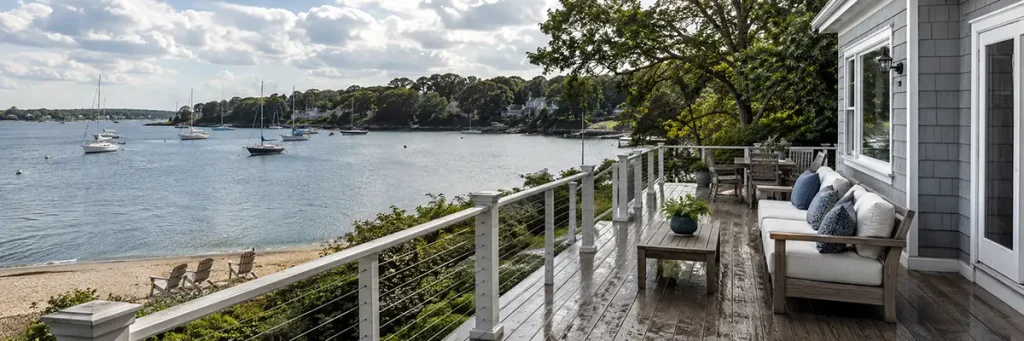
Life in the harbor towns runs on the water. Sailboats swing on their moorings in Oyster Bay Harbor, beach chairs come out early on the Bayville strip, and the old waterfront neighborhoods of Glen Cove still face Hempstead Harbor the way they have for more than a century. When you live here, a deck is not an accessory — it is your front-row seat to the harbor, the beach, or the woods behind the shoreline.
The same water that makes this stretch of the North Shore special is also hard on anything built outdoors. Salt air drifts well inland from the Sound, winter wind comes across open water with nothing to slow it down, and the shaded, north-facing side of a waterfront home can stay damp for days. Long Island Deck Company, a Decks Unique company, has been designing and building decks for these conditions for over 39 years, with a lifetime workmanship guarantee behind every project and Trex Platinum and TimberTech Pro installer credentials behind every material recommendation.
One Coastline, Three Building Conditions
From a building standpoint, this area is really three different places. A bluff-top home on Centre Island, a village colonial a few blocks off the Glen Cove waterfront, and a wooded estate lot in Mill Neck each ask something different of a deck. Before we talk boards and railings, we look at which of these three exposures your property actually faces.
Full Waterfront: Facing the Sound and the Open Harbor
Homes along the Bayville shore, the Lattingtown waterfront, and the outer points of the Necks take wind and weather head-on. Open-water exposure means real uplift forces during nor’easters, so we engineer these decks accordingly: reinforced ledger connections, hurricane-rated hardware, additional bracing, and footings sized and set below the frost line for the site, not just for the code minimum. Fasteners are stainless steel or high-grade coated, because ordinary hardware corrodes quickly this close to salt water.
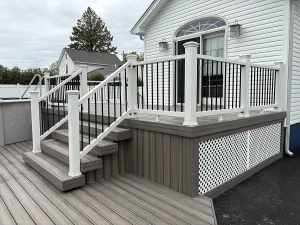
North-facing waterfront decks add a second challenge that surprises many owners: they weather faster in some ways than sunny southern exposures. With less direct sun to dry them out, boards stay wet longer after rain and fog, which invites mildew and algae on wood and keeps cheap composites looking tired. On these sites we usually steer homeowners toward PVC decking or premium capped composite, which shed moisture instead of absorbing it — our composite deck building service covers the Trex and TimberTech lines that carry fade-and-stain warranties ranging from roughly 25 to 50 years.
Harbor-Village Streets: Salt Air Without the Gale
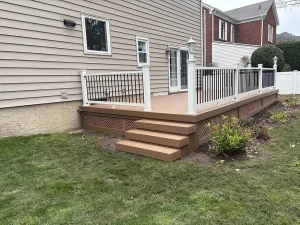
Most homes in Glen Cove’s neighborhoods, the hamlet of Oyster Bay, and nearby East Norwich are a short walk or drive from the water rather than directly on it. Salt air still reaches these streets, but the engineering emphasis shifts from wind loading to fit: tighter lots, older foundations, and houses with real architectural character. Here we spend more of the design effort on proportions — getting stair runs, landings, and railing heights to work with a 1920s colonial or a village Victorian — while still specifying corrosion-resistant fasteners and flashing details suited to a coastal zip code.
Wooded Estate Properties: Shade, Leaf Litter, and Damp
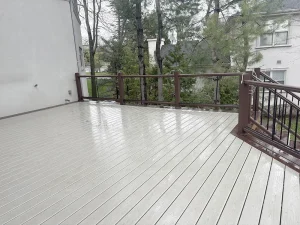
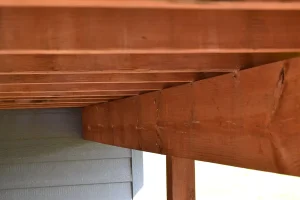
Locust Valley, Mill Neck, Oyster Bay Cove, and the quiet lanes of Lattingtown sit under mature tree canopy. Estate properties here rarely fight open-water wind, but they fight shade: decks that see little direct sun, collect leaf litter in board gaps, and hold moisture against the framing. We design for airflow — generous ventilation under low decks, consistent gapping, and joist tape over framing members — and we build the substructure from KDAT lumber, kiln-dried after treatment, which starts drier and stays more stable than standard framing. Decks Unique is the only decking company on Long Island offering KDAT framing, and it carries a limited lifetime transferable warranty.
Decks That Respect Historic Harbor Homes
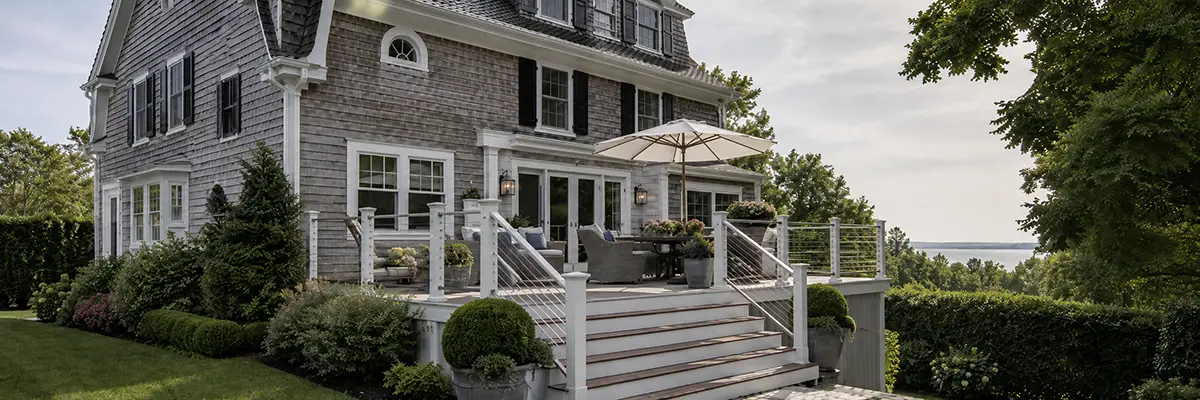
Glen Cove and Oyster Bay have some of the oldest housing stock on Long Island, and several of the surrounding villages take design review seriously. A bright plastic-looking deck bolted to a hundred-year-old home does the property no favors. When the architecture calls for it, we work in natural mahogany or cedar, traditional railing profiles, and picture-framed borders that read as original to the house — or we select composite and PVC boards in muted, wood-true tones that satisfy both a review board and a low-maintenance owner. Where village permits and inspections apply, we guide the process from drawings through final sign-off so it stays orderly and low stress.
Pergolas Above the Harbor Breeze
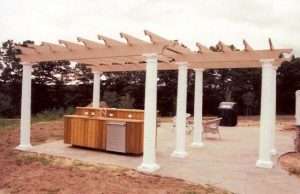
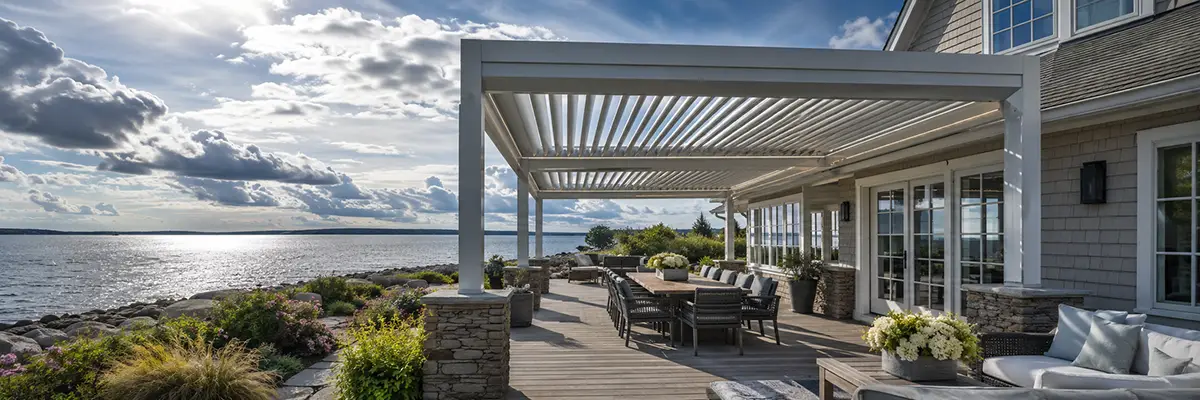
Shade matters on the water, where afternoon glare comes off the harbor as well as down from the sky. We design and build pergolas and outdoor structures throughout the harbor towns — freestanding garden pergolas that suit Locust Valley estate landscapes, attached pergolas that shade a Glen Cove dining deck, and automated louvered pergolas that are particularly smart on exposed sites: open the louvers for the breeze, close them when weather rolls in off the Sound. Every pergola we build near open water is engineered and anchored for wind, not just dropped onto deck boards.
Deck Resurfacing: New Life Over Sound Framing
Plenty of decks in this area were built decades ago, when the houses behind them changed hands less often. If the framing underneath is still structurally sound, you may not need a full rebuild. Our resurfacing service removes the worn decking and railings and installs a new Trex, TimberTech, or PVC surface over the existing structure — often transforming a gray, splintered estate deck or a salt-worn harborfront platform at a meaningfully lower cost than new construction. We inspect the framing honestly first; if it has rot or undersized connections, we will tell you, because new boards over a failing frame help no one.
Communities We Serve Around Glen Cove and Oyster Bay
We build throughout the eastern Gold Coast harbor towns. In Glen Cove, projects range from compact decks behind village colonials to large waterfront terraces overlooking Hempstead Harbor. Oyster Bay itself wraps around its working harbor, and decks there often trade square footage for a carefully framed water view. Bayville occupies a narrow strip between the Long Island Sound beaches and the harbor, so nearly every project there is a true coastal build. East Norwich, at the crossroads of Routes 25A and 106, gives us more sheltered inland sites where material choice can favor budget over storm rating.
Locust Valley anchors the estate country with larger, multi-zone outdoor living projects; neighboring Lattingtown pairs wooded lanes with a stretch of Sound shoreline; Mill Neck’s hillside properties often call for elevated decks where the pre-stained KDAT substructure earns its keep in plain view; and Oyster Bay Cove’s wooded privacy makes airflow and shade-tolerant materials the design priority.
Centre Island homeowners: this page now serves as our home for the peninsula, which stands almost entirely surrounded by Oyster Bay Harbor and the Sound — among the most exposed building sites anywhere on Long Island, and ones we engineer for accordingly.
Cove Neck homeowners will also find their area covered here. The neck’s mix of wooded estate lots and harbor frontage east of Oyster Bay draws on both our estate and full-waterfront building approaches, often within a single property.
Start at the Showroom or Start at the Shore
Material decisions get much easier when you can stand on full-size deck displays and compare boards in person. Our showroom at 119 Commack Road in Commack is an easy drive from the harbor towns, with Trex, TimberTech, PVC, and natural wood options side by side, plus railing and lighting displays. Prefer to start at home? We will meet you at your property, look at your exposure firsthand, and design from there. Call (631) 623-9300 or (516) 689-7800, or contact us online for a free design consultation and quote. Financing is available for qualified homeowners.
Frequently Asked Questions
What is the best decking for a home in Glen Cove?
It depends on your exposure. Close to Hempstead Harbor or on a north-facing waterfront lot, we usually recommend PVC or premium capped composite like Trex Transcend or TimberTech’s PVC lines, because they shed moisture and resist salt-air weathering with 25- to 50-year fade-and-stain warranties. On Glen Cove’s more sheltered village streets, the full range opens up, including cedar and mahogany for older homes where natural wood simply looks right.
Do you work as patio contractors in Glen Cove, or only decks?
We are deck and outdoor-structure builders rather than masonry patio contractors. That said, many Glen Cove homeowners come to us with a cracked or sinking patio and end up happier with a low-profile platform deck built over or beside it — and we regularly design decks that step down to and integrate with an existing patio so the two read as one outdoor space.
Can you build pergolas in Locust Valley or Bayville?
Yes. In Locust Valley, that often means a freestanding garden pergola scaled to an estate landscape. In Bayville, where sun and wind both come off the water, attached and automated louvered pergolas are popular — you can close the louvers against weather and open them for the sea breeze. Every pergola we build near open water is anchored and engineered for wind exposure.
Can a deck really handle direct Sound exposure on Centre Island or in Bayville?
Yes, if it is engineered for the site. On exposed Sound-front and harbor-mouth properties we use hurricane-rated hardware, reinforced ledger connections, additional bracing, stainless steel fasteners, footings set below the frost line, and our KDAT framing system for a drier, more stable structure. We have been building on exposed North Shore sites for over 39 years, and we design these decks for the storm that will come, not just the sunny day you will enjoy.
Do you handle deck repairs in the Glen Cove and Oyster Bay area?
Our schedule is built around new deck construction and resurfacing, so we take on repair projects late in the season as time allows. If your deck’s framing is still sound, resurfacing with new decking and railings is often the smarter fix than patch repairs — and we are glad to inspect it and give you an honest read either way.