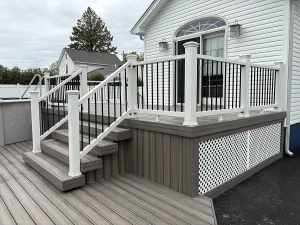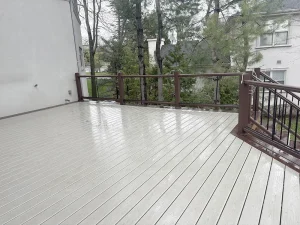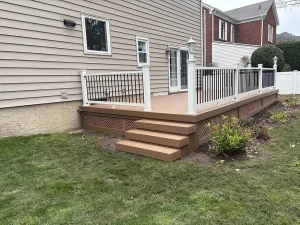





The View Is the Whole Point
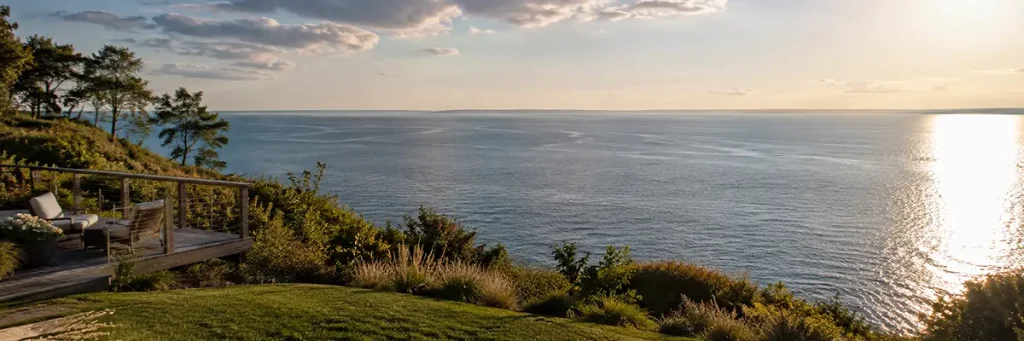
Stand at the edge of a bluff lot in Old Field or Miller Place and the property line stops mattering. Long Island Sound runs out to the horizon, the Connecticut shoreline floats in the haze on a clear day, and the light changes by the hour - flat silver in the morning, gold by dinner. Homeowners along Brookhaven's North Shore don't really ask us for a deck. They ask for a place to be when that is the backdrop. From Stony Brook's harbor through the Setaukets, Port Jefferson, Mount Sinai, Rocky Point, and Shoreham, out to Wading River, the request is almost always the same: whatever you build, don't get between us and the water.
Long Island Deck Company - a Decks Unique company with 39 years of building on Long Island - designs decks for exactly that. Everything on this page is about protecting a sight line - where the deck sits, what the railing does, how the structure handles bluff-top weather, and how to do it tastefully in one of Suffolk County's most historic corners.
Designing Around a Sight Line, Not Just a Floor Plan
A view deck starts with a question most deck plans never ask: where do your eyes go? We orient seating zones toward the water, slide the dining table off to one side so chair backs never wall off the panorama, and place the grill where the cook can still watch the sailboats. On sloped and bluff-top lots, elevation is everything - sometimes raising the platform eighteen inches turns a glimpse of the Sound into a full horizon, and sometimes stepping down a level keeps the wind off your shoulders without giving up the water.
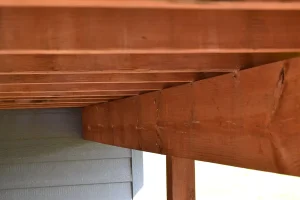
We also keep the structure itself out of the picture. Posts land at the corners instead of mid-span wherever the engineering allows, picture-framed borders draw the eye outward, and stairs go on the landward side so foot traffic never crosses the vista. Our kiln-dried-after-treatment (KDAT) framing earns its keep here too: a frame that stays straight keeps long railing runs true, and on a deck built for looking outward, a wavy rail line is the first thing anyone notices.
Cable Railing or Glass: Where the View Is Won or Lost
Railing is the single biggest decision on a Sound-view deck - it sits exactly at eye level when you're seated. Two systems do the job best, and they solve different problems.
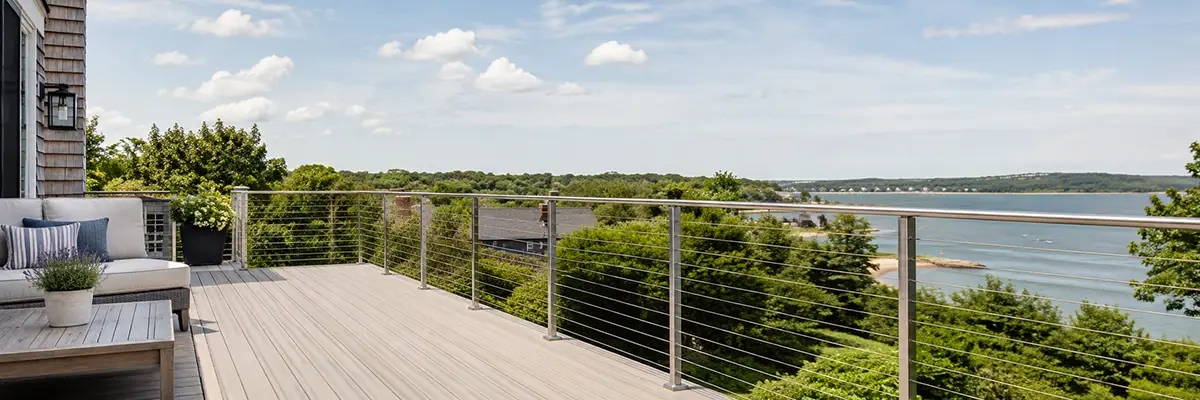
Stainless cable railing runs thin horizontal lines that all but disappear from a few feet back. It lets the breeze move through - welcome on a July afternoon - sheds pollen and salt film without much attention, and suits both modern homes and the shingled, traditional architecture of the Three Village area. Cables do need occasional re-tensioning, which we set up correctly from day one.
Glass panel railing gives you the most uninterrupted picture of all - nothing in the middle distance - and it doubles as a windbreak, which matters more than people expect on an exposed bluff in Rocky Point or Shoreham. The honest trade-off is cleaning: salt spray and pollen show on glass, so plan on wiping panels down the way you would a big window. Many of our clients mix systems - glass along the seating run facing the water, cable on the stairs and sides - and we'll mock up both so you can decide with your own eyes.
Decking That Can Take Bluff-Top Weather
A deck facing the Sound takes sun off the water, salt in the air, and wind that inland yards never feel. Most of our North Brookhaven clients land on composite or PVC decking - Trex, TimberTech, or Azek - because the capped boards shrug off fading and staining in exactly the exposures these lots dish out. Trex backs its Signature and Transcend lines with fade-and-stain warranties up to 50 years, and our Trex Platinum and TimberTech Pro status lets us add a 10-year labor warranty on eligible Trex projects, on top of our lifetime workmanship guarantee. PVC is our usual recommendation for low decks over damp ground and for shaded, wooded lots in Wading River and East Setauket where mildew resistance pays off.
If you love real wood - and on a historic Setauket property, mahogany underfoot is hard to argue with - we build with it gladly and tell you the truth about upkeep: cleaning and re-sealing every few years, more often on a south- or west-facing exposure. Either way, the frame underneath is KDAT lumber with a limited lifetime transferable warranty, because the surface only stays beautiful if the structure under it stays straight and dry.
Building Respectfully in the Three Village Historic Area
Stony Brook, Setauket, and Old Field carry some of the deepest history on Long Island, and the homes show it. A deck on a period house should look like it grew there - which usually means traditional railing profiles, finished skirting instead of an open underside, and decking tones that defer to the house rather than compete with it. We design to that standard, and where a project falls under village review or Town of Brookhaven permitting, we prepare the drawings, file the applications, and handle the inspections. Several communities along this stretch - Old Field, Port Jefferson, Shoreham - are incorporated villages with their own procedures, and we navigate each one as part of the job.
Pergolas That Frame the Water Instead of Hiding It
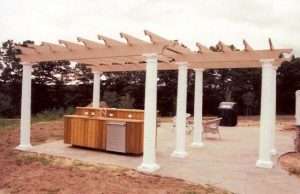
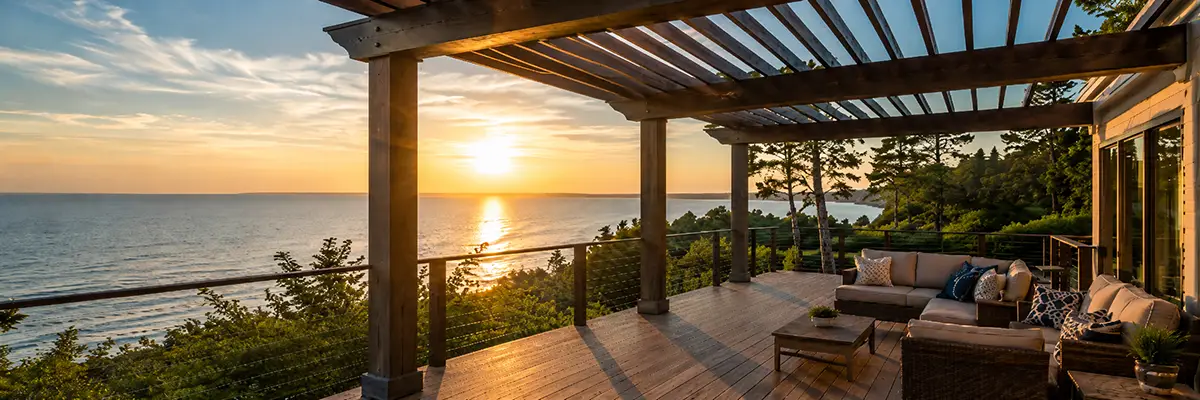
On a west- or north-facing bluff, evening sun off the water is glorious right up until it's blinding. A pergola solves that without boxing in the view - open framing overhead frames the horizon the way a mat frames a photograph. We build fixed-roof pergolas and outdoor structures as well as automated louvered pergolas whose roof slats rotate at the touch of a button: open for sun, angled against glare, closed tight when a squall blows in off the Sound. On an exposed lot, that last setting turns a fair-weather deck into a three-season room.
Resurfacing: Keep the Frame, Reclaim the View
Plenty of decks along this coast were framed well decades ago and only look tired on the surface. If an inspection shows your structure is sound, we can strip the worn decking and railings and install a new composite or PVC surface over the existing frame - and it's also the natural moment to swap a view-blocking wood railing for cable or glass. Same footprint, same permit history, completely different deck - and a much bigger piece of the Sound from your chair.
Communities We Serve Along Brookhaven's Sound Coast
Stony Brook pairs a university-town energy with one of the prettiest harbors on the North Shore. Setauket is the historic heart of the Three Village area, where deck design has to respect houses that predate the republic. East Setauket runs along the Route 25A corridor with a mix of period homes and wooded mid-century lots that favor mildew-resistant decking. Old Field occupies some of the most dramatic bluff frontage on Long Island, where view design and wind engineering matter equally. Port Jefferson stacks its neighborhoods on a hillside above the harbor and ferry, so even inland streets often have a water view worth designing around. Port Jefferson Station sits on flatter ground inland, with family yards where a deck becomes the main living room from May to October. Mount Sinai wraps around its own quiet harbor, and Miller Place climbs from a historic district to bluff-top streets above the beach. Rocky Point's roads slope steadily toward the Sound, and Shoreham keeps a wooded, village-scale character on the bluffs. East Shoreham neighbors it just inland, with leafy lots where pergolas and low platform decks shine. Wading River marks the eastern end of this run, where Brookhaven meets Riverhead and backyards start feeling like the North Fork.
See the Difference at Our Commack Showroom
Railing decisions especially deserve to be made in person - the difference between looking through cable and looking through glass is something a brochure can't show you. Our showroom at 119 Commack Road in Commack is an easy drive down 25A or Route 347 from anywhere in the Three Village area, with full-size deck displays, railing systems you can lean on, and Trex and TimberTech boards you can stand on in bare feet. Bring your survey or a few photos of the yard and we'll start sketching the sight lines on the spot. We're licensed and insured in Suffolk County, rated 5.0 on Google and 4.7 on Angi, and we'll give you straight answers before you commit to anything.
Frequently Asked Questions
What decking do you recommend for homes in East Setauket?
It depends on your exposure. Open lots with strong sun do best with capped composite like Trex Transcend or TimberTech, which carry long fade-and-stain warranties. Shaded, wooded East Setauket properties often call for PVC, which resists moisture and mildew where boards stay damp. On historic homes, we'll also walk you through mahogany if you want real wood and don't mind the maintenance.
Do you handle deck repair in East Shoreham or East Setauket?
Honestly, repair work is something we take on late in the season, once the year's new builds and resurfacing projects wind down. If your deck needs more than a small fix, a resurfacing over your existing frame is often the better answer and something we can schedule sooner. Either way, reach out early so we can get you on the calendar.
Do you build pergolas in Sound Beach?
Yes - Sound Beach sits right between Miller Place and Rocky Point, in the middle of this service area. We build both fixed pergolas and automated louvered models with rotating roof slats, either freestanding in the yard or integrated into a new or existing deck.
Cable railing or glass railing - which is better for a Sound view?
Both protect the view; they trade differently. Glass is the most uninterrupted and doubles as a windbreak on an exposed bluff, but salt film and pollen show, so it needs regular wiping. Cable nearly vanishes from a few feet away, lets the breeze through, and needs only occasional re-tensioning. Many clients run glass along the water-facing seating area and cable everywhere else.
Do bluff-top decks need special engineering?
They need more careful engineering, yes. Wind exposure on a bluff calls for hurricane-rated connectors and a continuous load path from railing to footing, and footing placement has to respect the bluff edge and local setback requirements. We design for those conditions, prepare the drawings, and manage Town of Brookhaven or village permitting and inspections from start to finish.
Start With a Conversation About Your View
Tell us what you see from your back door - or what you should be seeing and aren't. Contact us for a free design consultation or call (631) 623-9300, and let's build the deck your view has been waiting for.