Trex vs TimberTech vs Azek: Which Composite Decking Fits Long Island Homes Best?
Choosing the right composite decking is more than picking a color you like. Long Island weather, coastal exposure, and how your family uses the space all shape which board will perform and look great over time. In this guide we compare Trex, TimberTech, and Azek (TimberTech Advanced PVC), explain how each behaves in our climate, and share practical design and installation notes so you can make a confident choice.
Why Long Island Climate Matters
From sea breeze and salt air to freeze thaw swings, Long Island conditions test outdoor materials. Summer sun can warm dark boards and highlight ventilation issues. Winter cold stresses framing and fasteners if gapping is ignored. If your deck wraps a pool, consistent splash and bare feet raise the bar on traction, drainage, and nighttime lighting. Keeping these realities in mind up front helps any brand perform better and last longer.
Brand Overview at a Glance
Trex popularized capped composite boards with approachable collections and a wide palette that pairs easily with many railing systems. TimberTech Composite emphasizes richer textures and realistic grain, with several cap technologies across price tiers. TimberTech Advanced PVC (often called Azek) uses an all PVC core that sheds water readily and is favored around pools and coastal installations for its quick drying and crisp embossing.
Material Construction and Why It Matters
Composite vs PVC Cores
Capped composites blend wood fibers with polymers under a protective shell. They feel substantial underfoot and offer strong value. PVC boards are all polymer, which reduces water absorption and weight, and can offer advantages in consistently wet zones. Neither option is maintenance free, but both target lower upkeep than traditional wood.
Surface Texture, Traction, and Heat
Deeper embossing can improve grip and help disguise scuffs. Finish sheen also matters; lower glare often reads more natural and feels surer underfoot when wet. For heat, color choice is usually more important than brand. Lighter hues, shade elements, and healthy under deck airflow make a noticeable difference in midsummer comfort.
How They Compare in Real Use
When clients ask for a side by side, we frame it by everyday priorities rather than spec sheets. If your family hosts big gatherings, scratch and scuff forgiveness under chairs may lead you toward certain textures. If you want a coastal look with the least water concern near a pool, PVC can be compelling. When budget and broad color options matter most, Trex often shines. For premium, wood like visuals and modern color blocking, TimberTech Composite is a frequent pick.
- Trex: Broad color range, proven composite tech, strong accessory ecosystem. Great for value balanced projects.
- TimberTech Composite: Rich textures, realistic grain, contemporary tones. Strong for design led spaces.
- TimberTech Advanced PVC (Azek): Excellent moisture behavior and quick drying near water. Often chosen for pools and coastal exposure.
Design Choices That Elevate Any Brand
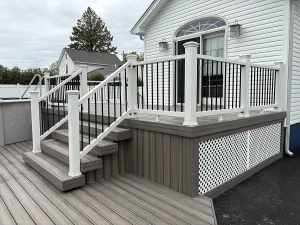
The board you pick is one part of the story. Layout and detailing take it further. Picture framing with border boards protects cut ends and creates a clean perimeter. Two tone designs can subtly define a dining zone from a lounge area without rail walls. Hidden fasteners deliver a barefoot friendly surface, and integrated stair or post cap lighting extends safe evening use.
- Picture framing: Polished look and edge protection.
- Two tone color blocking: Natural zone definition.
- Hidden fastening: Clean lines and fewer snag points.
- Lighting: Safety on stairs and ambiance after dark.
Installation Details That Affect Performance
Even the best boards underperform if framing and airflow are overlooked. Follow each brand’s joist span and blocking guidance, especially at picture frame borders and stair treads. Respect side and end gaps so boards can expand and contract without buckling. Back ventilate fascia to reduce oil canning, and plan railing post blocking plus wire paths for lighting before the first field board goes down.
Quick Checklist for Your Site
- Full sun deck or mixed shade
- Pool or splash zone exposure
- Desired grain realism and sheen
- Railing style and sightlines you want to preserve
- Ventilation and drainage opportunities under the deck
Cost and Long Term Value
Upfront material cost varies by collection and finish. Over the long term, composite and PVC boards aim to cut down on sanding, staining, and sealing cycles common with wood. That said, plan for routine rinsing and occasional gentle scrubbing, mind furniture glides, and use brand approved cleaners to protect the cap. Good detailing and drainage are value multipliers regardless of the brand you choose.
Ready to Talk Through Samples and Options
Your yard, sun patterns, and family routines are unique, and the best choice reflects that. We can walk you through traction, heat, color selection, and layout ideas with real samples and photos of recent Long Island projects. If you want a second opinion on framing or railing integration, bring drawings and we will talk through the details that impact performance.
Talk With Decks Unique
Have questions or want help comparing brands for your space We are happy to discuss materials, layouts, and maintenance expectations so your deck fits your home and lifestyle. Reach out and let us know how you plan to use the space, and we will guide you to a short list that makes sense for Long Island living.
Contact Decks Unique
Let us help you narrow the options to the best fit for your yard and budget. Call (631) 623-9300 or (516) 689-7800, or use our contact form for a free consultation and quote. We will respond promptly and can review samples, traction, heat, and design choices with you.
Frequently Asked Questions About Trex vs TimberTech vs Azek for Long Island Decks
Will composite or PVC decking fade over time?
Modern capped boards are engineered to resist noticeable fading. Expect some initial weathering as the surface acclimates, which typically stabilizes. Stick with brand approved cleaners and avoid harsh solvents.
Is one brand always cooler underfoot?
Color has the biggest impact on temperature. Lighter shades paired with shade structures and healthy under deck airflow feel more comfortable in peak summer sun than any dark board, regardless of brand.
How should I compare traction?
Ask for wet traction data and test sample boards where possible, especially if your deck borders a pool. Deeper, lower sheen grains usually feel more surefooted when wet.
Do different boards require different framing?
Yes. Confirm joist spacing, stair tread support, and blocking requirements for your chosen collection. Follow gapping and ventilation guidance to help boards move naturally and dry quickly.
What maintenance is recommended?
Rinse periodically, spot clean with approved cleaners, and protect surfaces with proper furniture glides. Keep debris out of gaps so water drains freely. With these basics, composite and PVC boards deliver the low upkeep most homeowners want.